

How Pathfinders Help Avoid the Trash Heap of Business History

Forty-two-percent of global CEOs see the cliff – do you?
The cliff you ask?
Their companies won’t be viable in the next ten years if they continue on their current path.
Think about that for a minute.
These captains of industry told PwC’s 28th Annual Global CEO Survey they are heading for disaster if they can’t change their company.
That has us wondering about the other 58%. Are they ahead of the curve, in denial, or just asleep at the wheel?
The PwC survey was released in January 2025. How many of the 4,701 surveyed CEOs had even considered the possibility of a global trade war, that DeepSeek would challenge the assumptions about how AI needs to be built, or any other unknown development when they answered? How many had already committed to strategies that were rendered obsolete overnight?
The huge challenge for all of us?
Businesses consistently misjudge the velocity of change.
Ira Wolfe, a highly regarded author and speaker, warned in The Pace Paradox that a five-year business plan in 2004 felt like a one-year plan in 2024—and by 2044, it might feel like a matter of weeks. Given how 2025 has started, that timeline may need even more compression.
If C-level decisions take six months to become Director-level actions, yet market conditions shift every 2-3 months, your business is already behind. So what does this mean for you?
It means you need to ask some hard questions.
How quickly can your business adapt? How agile is your organization when faced with disruption? Who in your organization—at all levels—can you turn to?
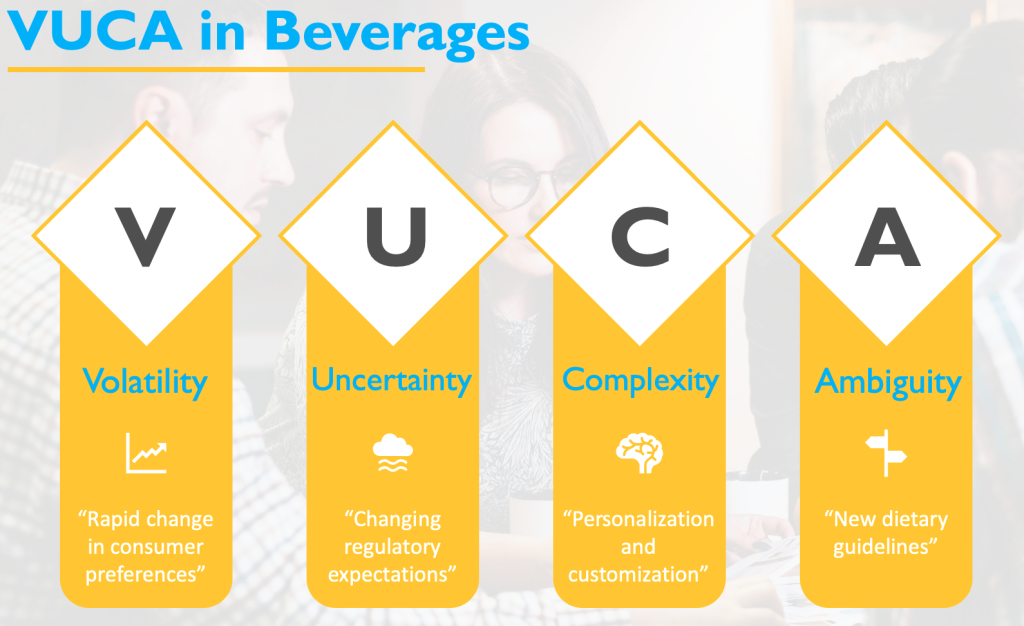
This isn’t just a problem for the tech sector. Every industry—including yours—is operating in a VUCA world. Professional services, automotive, health care, beverages, and retail—you name it, all of them—the forces of volatility, uncertainty, complexity, and ambiguity are rewriting the rules.
To survive, companies must find a new path.
That means new products, new markets, and new business models. But it also means something deeper—building an organizational structure that is adaptable by design and developing people who can navigate the unknown.
NextJump describes this shift as moving from the OLD world, where followers “create value by executing what they’re told,” to the NEW world, where learners “create value without being told how.”
We call these “learners” Pathfinders – those who, when faced with opportunities and challenges, reject the status quo and innovate to find a new way and create a path for others to follow.
And here’s the real challenge:
- Pathfinders aren’t defined by hard skills (things you learn and can list on a CV),
- They’re defined by soft skills such as being self-directed, curious, positive, and able to thrive in ambiguity.
Yet businesses still hire for hard skills, then turn around and promote individuals based on soft skills – even though the half-life of hard skills has already plummeted from 2.5 years (2023) to just 1 year (2024).
So if success in a world that won’t stop changing depends on Pathfinders, what’s the solution?
Our latest eBook for one: How to Avoid the Trash Heap of Business History – Developing Pathfinder Skills in Your People Before It’s Too Late. You can download a copy via:
It will show you how to coach your team to develop Pathfinder skills, making your business faster, more adaptive, and ready to handle whatever comes next.
Because the 42% of CEOs who see the cliff are right.
Those of us who act fastest will be the ones who survive and thrive.