

The Peril of Certainty: How Rigidity Exacerbates Outdated Thinking
Certainty feels safe.
It’s comforting to know that your beliefs and methods, the ones that got you here, are solid and dependable. But what if this very certainty is what’s holding you back?
We recently highlighted the dangers of outdated thinking—clinging to debunked concepts like the Alpha Male or Left-Brain/Right-Brain dominance. Yet, the issue runs deeper. It’s not just about the ideas themselves; it’s about our unyielding commitment to them. When certainty solidifies our outdated beliefs, it creates a fortress against our ability to think.
The Trap of Consistency
Robert Cialdini’s principle of consistency plays a pivotal role here.
As social creatures, we crave consistency in our actions, thoughts, and public personas. Once we declare a belief, especially in today’s world of instant, public communication, we feel an immense pressure to stay consistent with that stance. To quote Cialdini, we can “become impervious to the sieges of reason”.
Social media amplifies this effect, making our beliefs not just personal convictions but public declarations. We align our identities with these declarations, and any shift might seem like a betrayal of self.
This is where the danger lies.
Once our beliefs are out in the open, especially on platforms where they are liked, shared, and reinforced, we become more resistant to change. We build echo chambers around ourselves, insulating our outdated thinking from the sieges of reason and new evidence.
What could be a dynamic process of learning and adaptation instead turns into a stagnant adherence to the past.
Buddhism and the Fluidity of Thought
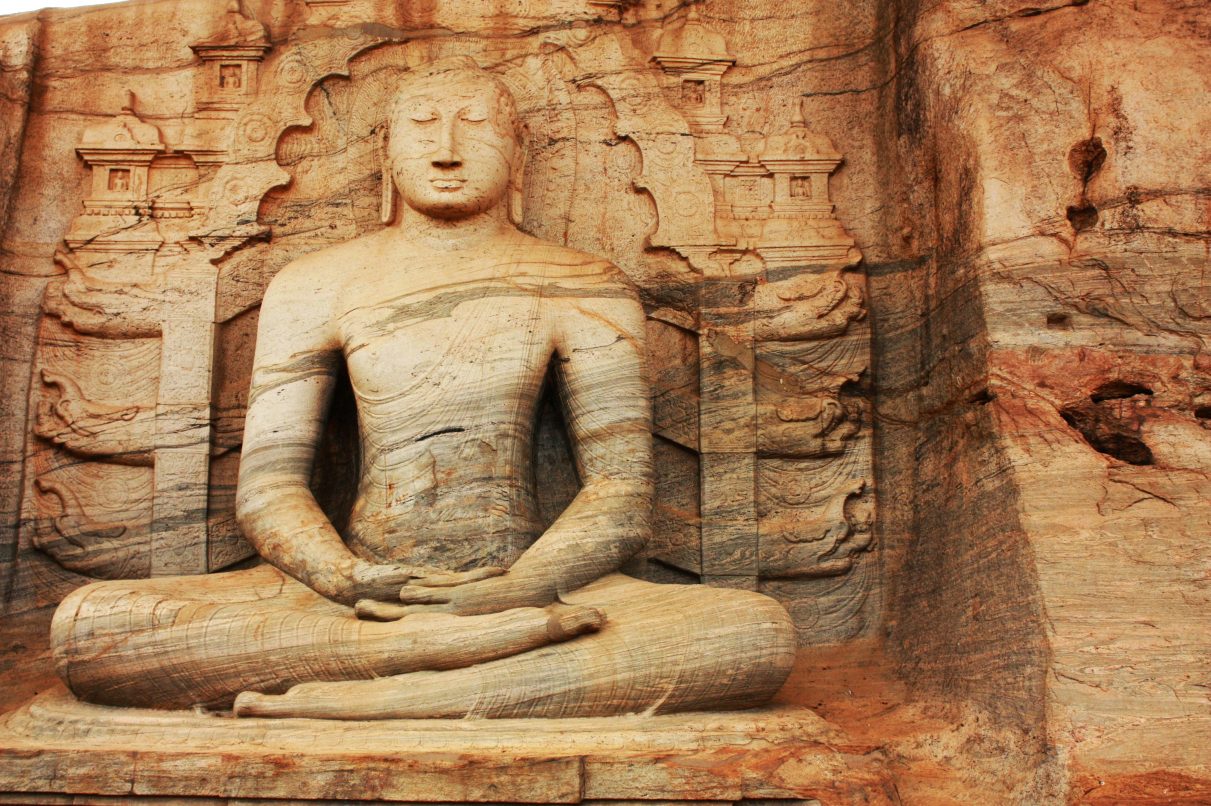
Buddhism offers a contrasting perspective on certainty. In Buddhist philosophy, the concept of anicca, or impermanence, is central. Everything, including our thoughts and beliefs, is in constant flux.
Clinging to certainty is seen as a source of suffering because it goes against the natural order of change. The Buddha taught that certainty in our thoughts and perceptions can lead to dukkha—a state of dissatisfaction and unease.
Buddhism encourages a mindset of openness and flexibility. Instead of attaching ourselves to rigid beliefs, we are encouraged to remain curious and adaptable, understanding that what we hold as true today may not hold tomorrow. This philosophy could not be more relevant in a world where outdated thinking can stifle innovation and growth.
Social Commentary: The Wisdom of Uncertainty
Cultural icons have often warned against the perils of certainty. Take Anthony Bourdain’s tattoo, “Certain of Nothing”. This simple statement encapsulates a worldview where openness to new experiences and ideas takes precedence over rigid beliefs. Bourdain’s life was a testament to this—constantly exploring, learning, and challenging his own preconceptions.
Similarly, Inspector Morse, the iconic British detective, once remarked about a colleague: “I think he’s a man who has very strong views, and I can respect that. It’s his certainty that worries me.”
This line highlights a critical distinction. Strong views are not inherently dangerous; it’s the unwavering certainty, the refusal to entertain alternative perspectives, that is truly concerning.
The Polarization Problem
Certainty isn’t just a personal issue; it has societal ramifications too.
We are living in increasingly polarized times. Society is splitting into two camps on every issue (large and small), each fortified by their own certainties, with little room for middle ground or nuanced discussion.
The more certain we become of our beliefs, the less we listen to others. This division is not just political but extends into our workplaces, communities, and even our social circles.
Polarization thrives on certainty. It’s easier to demonize the other side when you are absolutely certain of your own righteousness. But in doing so, we lose the ability to engage in constructive dialogue. The middle ground, where most solutions are found, disappears.
Certainty becomes not just a personal hindrance but a societal one, obstructing progress and fostering division.
Embracing Uncertainty for Growth
The antidote to the dangers of certainty is not a complete rejection of beliefs but rather an embrace of uncertainty. This means acknowledging that what we know may be incomplete or even incorrect. It involves creating spaces—both in our minds and in our societies—where questioning and evolving our thoughts is encouraged.
In practical terms, this could mean adopting practices like Cialdini’s Devil’s Advocate approach, where one actively seeks out dissenting opinions. It could also mean engaging with people who challenge our thinking—whether they are younger, older, from different cultures, or simply have different life experiences.
The path forward is not about abandoning all beliefs but about holding them lightly, understanding that they are not immutable truths but ideas subject to change as we grow and learn.
In Summary
Certainty can feel like strength, but more often than not, it is a barrier to growth. It fortifies outdated thinking, alienates us from others, and polarizes society. By embracing uncertainty, we can open ourselves to new ideas, challenge outdated beliefs, and find common ground in a divided world.
As Bourdain wisely inked on his arm, being “Certain of Nothing” might just be the key to everything.
Or, as the old adage goes, you can be right or you can be in a relationship.